PCR Glass Packaging: Recycled Content Guide

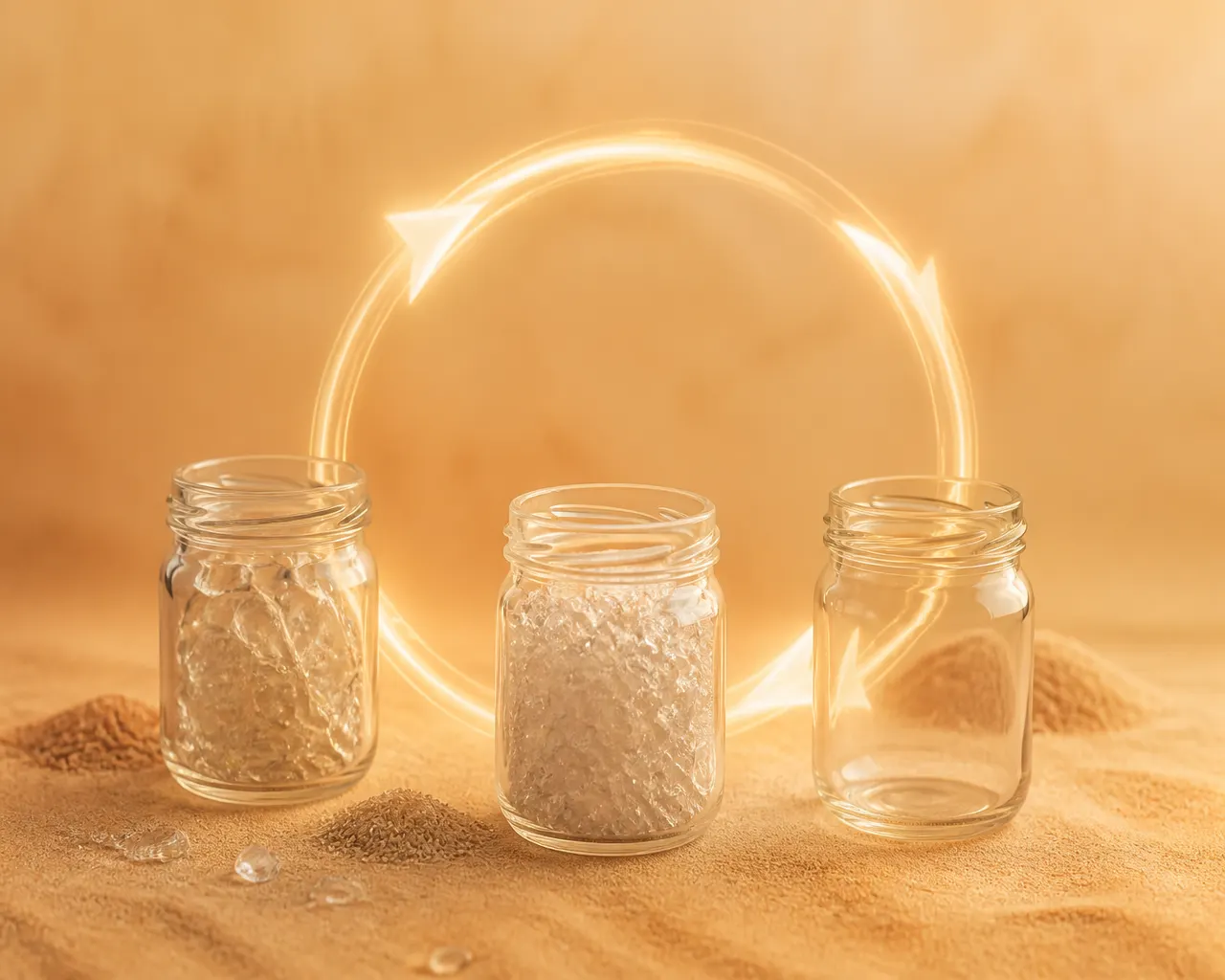
Post-consumer recycled (PCR) glass — usually called cullet in the trade — is crushed glass from bottles and jars that already lived one consumer life and is melted again into new containers. Unlike plastic, glass can repeat that loop without losing purity or strength, which is why recycled content has moved from a marketing line to a line item in B2B packaging specifications. The recycled glass market is projected to grow from roughly USD 4.8 billion in 2026 toward USD 7.5 billion by 2033, and furnace operators are buying cullet as fast as collectors can sort it.
What PCR content actually changes in the furnace
Cullet melts at a lower temperature than virgin raw materials — soda ash, limestone and sand — so every share of cullet in the batch reduces the energy the furnace needs. The industry rule of thumb is roughly 2–3% less furnace energy per 10% cullet in the melt, plus a proportional drop in CO2 from both fuel and from the soda-ash reaction that virgin batches release. A melt running 50% cullet therefore burns meaningfully less gas and emits less CO2 per tonne of glass than a 0% melt, with no change to the chemistry of the finished container.
For the buyer, the practical consequence is that PCR content is a furnace input decision, not a product downgrade. A jar melted from 40% cullet has the same food-contact safety, the same barrier properties and the same recyclability as one melted from virgin batch, because the recycled fraction is glass itself. What does change is colour tolerance and availability, which is where specifications get real.
What EU PPWR does — and does not — require from glass
The EU Packaging and Packaging Waste Regulation (Regulation 2025/40) sets mandatory recycled-content targets for plastic packaging, not for glass. Glass instead carries reuse and recyclability obligations: packaging must be designed for recycling, and reusable formats get separate targets. So a buyer specifying PCR glass today is usually acting ahead of the law — for brand sustainability claims, retailer scorecards or carbon accounting — rather than closing a legal gap. That distinction matters when a supplier quotes "PPWR-compliant recycled glass": for glass the honest claim is design-for-recycling plus a stated cullet share, not a mandated percentage.
How to specify PCR content in an RFQ
Treat recycled content like any other technical parameter and put it in writing before samples: state the minimum cullet percentage, the acceptable colour range, and whether the ratio must be documented per production batch. Ask for the sorting standard of the cullet (food-contact origin, metal and ceramic limits) and confirm the ratio applies to the specific mould you are buying, because some furnaces run high-cullet melts only for amber and green glass.
GlassPacker states the cullet ratio on every quotation for its stock moulds — clear flint jars typically run up to about 30% PCR cullet while amber and green containers accept higher shares — so buyers can compare offers on the same basis instead of guessing from a sustainability logo.
The honest limits: colour, clarity and supply
High cullet shares narrow the colour window. Clear flint glass needs clean, colour-sorted cullet; mixed cullet pushes the melt toward green or amber tints, which is why premium water-clear jars often carry a lower PCR ceiling than beer-amber bottles. Slight tint variation between batches is normal and should be accepted in the specification with a reference sample, or the supplier will simply reject high-cullet batches and your lead time suffers.
Supply is the second limit. Cullet availability is regional — Europe collects far more than Asia — so a factory far from collection networks may quote a lower realistic ratio than its brochure claims. When recycled content is a hard requirement, ask where the cullet is sourced and whether the ratio is guaranteed contractually or "subject to batch".
Putting PCR glass into a 2026 packaging plan
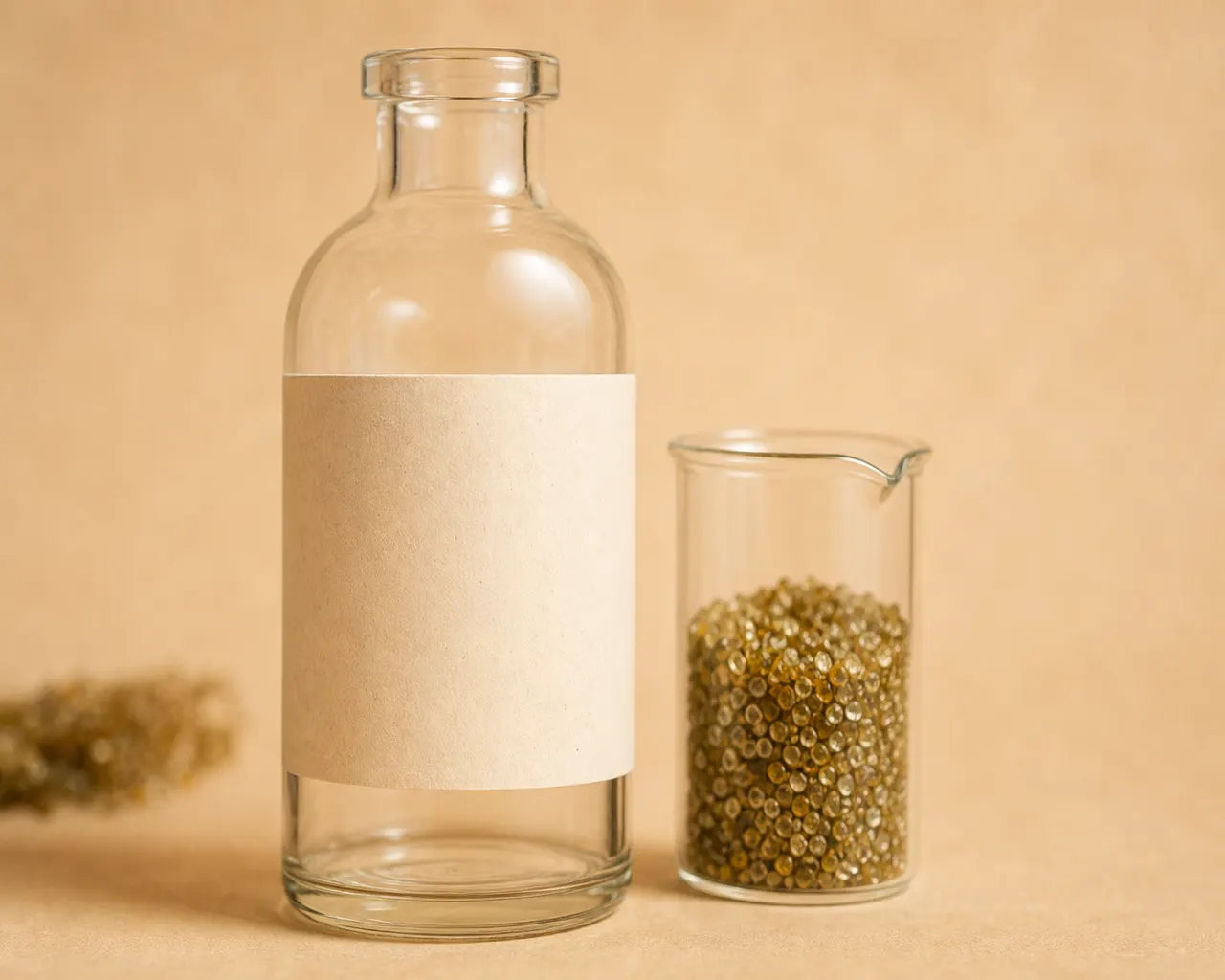
A workable sequence for most brands: keep clear hero SKUs on the supplier's standard flint with its default cullet share, move amber and green SKUs to the highest available PCR ratio, and record both ratios in the product carbon footprint. Pair that with lightweighting — the cheapest CO2 cut per bottle — and the sustainability story holds up under retailer audit without premium pricing on every line.
For brands sourcing from GlassPacker's stock range, the PCR conversation folds into the normal quotation: state the target cullet share with the capacity and closure, and the offer returns ratio, MOQ of 1,000 pcs per size and a 5–7 day production window for stock shapes in one document.
FAQ
Is PCR glass safe for food and spirits?
Yes. Recycled glass is melted above 1,400 °C, which resets it to the same inert, food-contact material as virgin glass; there is no migration or purity difference in the finished container.
Does higher recycled content make the jar weaker?
No. Strength comes from forming and annealing, not from whether the melt started as cullet or raw minerals; a properly annealed 40%-cullet jar matches a virgin-batch jar on vertical load and thermal shock.
Why cannot clear jars run the same cullet share as amber ones?
Clear flint needs colour-sorted cullet; mixed green and amber fragments tint the melt. Amber and green containers absorb that tint, so they accept higher mixed-cullet shares while water-clear formats keep a lower ceiling.
Leave a comment
No comments yet — be the first to share your thoughts.